
Marketing shouldn’t feel like guesswork
For many trade and technical businesses, marketing raises more questions than answers:
What should I be doing?
Who should I trust to help?
How much should I spend?
Is any of it actually working?
When you're busy delivering projects, marketing often becomes something you “fit in” - or avoid entirely.
But the reality is this:
If you can measure it, you can improve it.
Once you understand what to track, marketing becomes far easier to manage - and far more effective.
The real problem with most marketing
A lot of marketing reporting focuses on:
Clicks
Impressions
Website traffic
Rankings
While useful, these don’t tell you what you actually need to know:
Is this activity actually generating profit?
As a business owner, what matters is simple:
How much revenue - and profit - your marketing is contributing.
Step 1: Understand what a customer is really worth
Customer Lifetime Value (CLV) is the total revenue a customer generates over time.
Example:
Average job value: $2,000
Jobs per year: 5
Customer lifespan: 3 years
Total value = $30,000
That customer is worth far more than a single job - and this number is critical when making marketing decisions.
Step 2: Know what it costs to win that customer
Your cost to acquire a customer includes everything involved in getting that work:
Advertising spend
External support (agency or freelancer)
Your time
Sales and admin effort
For example:
Google Ads: $1,200
Time + admin: $500
Total cost = $1,700
Step 3: Compare the two
Now bring those numbers together:
Customer value: $30,000
Cost to acquire: $1,700
This is where clarity comes from.
If the value significantly outweighs the cost, your marketing is doing its job.
If not, something needs to change.
Want to run your own numbers?
In under 30 seconds, you’ll see: Profit from your marketing, Return on investment and what your marketing should be generating
Try my Free Marketing Profit Calculator →Your marketing budget isn’t the focus - return is
Instead of asking:
“How much should I spend?”
Ask:
“What return am I getting?”
Spend $1,000 → generate $5,000 → scale it
Spend $1,000 → generate nothing → stop it
The goal isn’t to spend more - it’s to spend effectively.

The part most businesses overlook: repeat value
Many businesses only look at the first job.
But in reality:
The real value often comes from repeat work
When you factor that in:
Follow-up becomes important
Customer experience matters
Retention drives profit
Good marketing doesn’t just bring in new work - it helps build long-term value.
What actually makes marketing work
Once you understand your numbers, improving them becomes much simpler.
Know what’s working (and what’s not)
Track where your leads are coming from, what’s converting, and what it’s costing you. Without this, it’s easy to keep spending on things that don’t deliver.Stay consistent
Marketing rarely works instantly. What you’re seeing today is often the result of what you did months ago - so stopping and starting makes it hard to build momentum.Improve what’s already working
When you find something that delivers results, don’t replace it - build on it.
ROI = Profit ÷ Cost
If something is working, invest more into it.
If it’s not, adjust or stop.
Why some marketing doesn’t deliver results
Even when businesses are investing in marketing, results can be inconsistent.
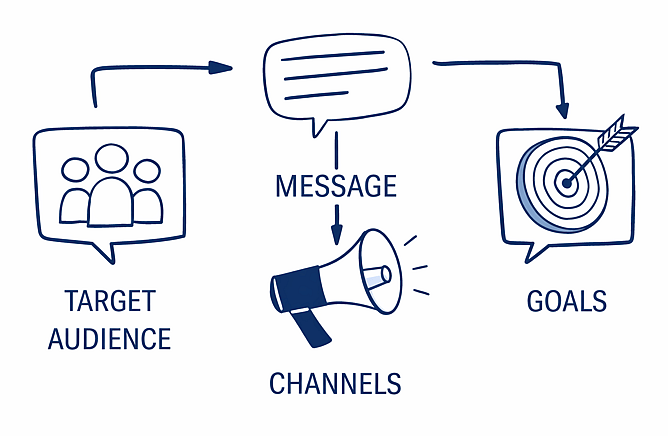
In many cases, it comes down to three simple things:
Targeting the wrong people
If you’re not clear on who you want to work with, your marketing becomes broad - and less effective.Saying the wrong things
If your message doesn’t speak to what your customer actually cares about, it won’t connect - no matter where it appears.Using the wrong channels
Running ads or investing in SEO without the right audience and message in place often leads to wasted spend.
Stop spending on marketing that doesn’t deliver
It’s easy to get pulled into:
SEO promises
Ad campaigns
New platforms
But without clear measurement, it’s difficult to know what’s actually working.
Better decisions come from better visibility.
What this gives you
When you understand your numbers, you gain:
Confidence in your decisions
Control over your pipeline
Flexibility in pricing and workload
And importantly - you stop guessing.
Where to start
If you’re unsure whether your marketing is working - start with your numbers.
Try my Free Marketing Profit Calculator → It takes less than a minute and will give you a clear picture of what your marketing is actually generating.
From there, you can make better decisions about where to invest and where to stop wasting money.
How DigiDala supports this
Once you understand your numbers, the next step is improving them.
That’s where I come in.
I work with businesses across building products, construction, and technical industries to turn marketing into something practical, consistent, and measurable - not just activity.
This includes:
Ongoing marketing support to keep everything moving
Website updates and improvements that support conversion
Sales and marketing tools that help you win better work
2D animation and visual content to clearly communicate what you do
3D product renders for technical and product-based businesses
Brand and visual identity to present your business clearly and consistently
The focus isn’t on doing “more marketing”.
It’s on making sure what you are doing is working - and improving it over time.

